Skip to content
Instructions:
- Preheat your oven to 400°F (205°C) and place a rack in the center position.
- Prepare the whole head of garlic by removing the loose outer papery layers, keeping the cloves intact on the base.
- Trim about ¼ inch off the top of the garlic head to expose the tops of the cloves.
- Place the garlic head on a small sheet of aluminum foil, drizzle with 1 tablespoon of extra virgin olive oil, and sprinkle lightly with kosher salt.
- Wrap the garlic loosely in the foil, allowing space for steam to circulate, then place the wrapped garlic in a small oven-safe dish.
- Roast the garlic in the preheated oven for 35–40 minutes until the cloves are very soft and lightly golden, smelling sweet and aromatic; larger heads may need 5–10 minutes more.
- Remove the garlic from the oven and let it cool until safe to handle, then carefully unwrap to avoid escaping steam.
- Squeeze the softened garlic cloves from their skins into a small bowl and mash them with a fork until smooth and paste-like; set aside.
- Trim the cauliflower heads by removing green leaves and the tough core, then break into medium florets, cutting large pieces smaller for even cooking.
- Rinse the florets thoroughly under cool running water and drain well in a colander.
- Fill a large saucepan with 1–2 inches of water and place a steamer basket inside, ensuring the water level is below the basket bottom.
- Bring the water to a gentle boil, add the cauliflower to the steamer basket, cover with a lid, and steam for 12–15 minutes until very tender and easily pierced with a fork.
- Drain the cauliflower in a colander for 3–5 minutes, shaking gently to remove excess moisture, which is crucial to prevent watery mash.
- Optionally, place the drained cauliflower in a clean kitchen towel and gently press to remove more moisture or return it to the warm pot over very low heat for 1–2 minutes, stirring gently to evaporate additional liquid without browning.
- Transfer the warm cauliflower to a food processor bowl (work in batches if necessary), then add softened cream cheese, butter, mashed roasted garlic, Parmesan cheese, kosher salt, black pepper, and optional garlic powder.
- Secure the lid and pulse until the mixture breaks down into a thick, creamy mash; scrape down the sides and continue processing until very smooth.
- Check the consistency and add heavy cream one tablespoon at a time if needed, blending briefly after each addition to avoid thinning the mash too much.
- Taste and adjust seasoning, adding more salt, pepper, or garlic powder as desired, then blend briefly again.
- Transfer the mashed cauliflower to a clean saucepan and warm gently over low heat, stirring for 2–3 minutes if needed, avoiding boiling to prevent dairy separation.
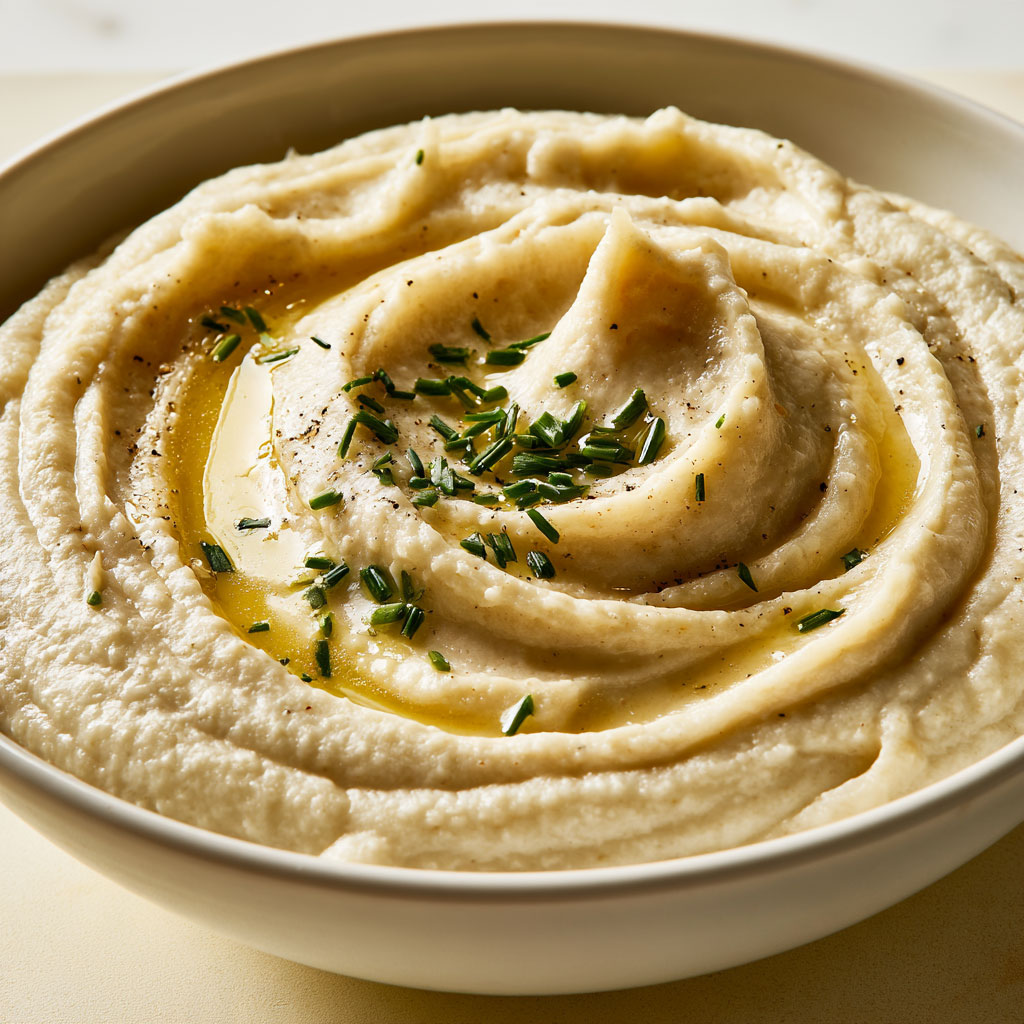
- Spoon the hot mash into a large white serving bowl, creating soft swirls with the back of a spoon to form a fluffy mound with peaks and valleys.
- Optionally drizzle melted butter over the surface, letting it pool in the swirls for a glossy finish.
- Sprinkle finely chopped fresh chives and a pinch of black pepper lightly over the top.
- Serve immediately while warm alongside your favorite holiday dishes.
Variations
- Add ½ cup sharp cheddar cheese while blending for a cheesier flavor.
- Incorporate 1 teaspoon fresh thyme leaves for a subtle herbal note.
- Replace 1 tablespoon of butter with an extra tablespoon of cream cheese to add a tangy dimension.
- Mix in 1 tablespoon sour cream for richer creaminess.
- Substitute butter with olive oil and use dairy-free cream cheese and Parmesan alternatives for a dairy-free version.
- Add a pinch of smoked paprika or cayenne pepper to introduce smoky or spicy undertones without overpowering the roasted garlic.
Tips
- Choose fresh cauliflower heads that are firm with tightly packed florets and free from dark or soft spots.
- Cut florets uniformly to ensure even steaming and consistent texture.
- Prefer steaming over boiling to avoid excess water absorption that can thin the mash.
- Drain the steamed cauliflower thoroughly to remove as much moisture as possible, including pressing gently with a towel or warming briefly on low heat.
- Use full-fat cream cheese for optimal creaminess; light versions may yield a less rich texture.
- Store leftovers in shallow airtight containers, refrigerating within two hours, and consume within 3–4 days.
- Reheat gently on low heat or in the microwave, stirring frequently and adding a little butter or cream if the mash seems dry; avoid overheating to prevent separation.
- Mashed cauliflower can be frozen for up to 2 months; thaw overnight in the fridge and reheat slowly, stirring to restore texture.
- Prepare garnish such as melted butter and chopped chives just before serving for the best presentation and flavor.