Skip to content
Instructions:
- Preheat your oven to 400°F (205°C) and position the oven rack in the center for even heat distribution.
- Prepare all ingredients and equipment including a roasting pan, mixing bowl, pastry brush, kitchen twine if needed, and an instant-read thermometer.
- Remove the thawed turkey breast from its packaging and check if it is already tied; if not, use kitchen twine to secure it into a compact, uniform shape to ensure even cooking and easier slicing.
- Pat the turkey breast dry thoroughly with paper towels, especially the skin, to promote golden, crispy roasting.
- Place the turkey breast skin-side up on a clean cutting board and allow the butter to soften to a spreadable consistency but not melted.
- In a bowl, combine the softened butter with minced garlic, chopped rosemary, thyme, sage, salt, pepper, and smoked paprika; mix well until evenly incorporated.
- Reserve 2 tablespoons of this herb butter for basting during roasting, then gently slide your fingers beneath the skin to separate it from the meat, keeping the skin attached at the edges to cover the breast.
- Spread about half of the remaining herb butter directly onto the meat under the skin, distributing it evenly to infuse flavor as it melts during roasting.
- Massage the remaining butter mixture over the outside of the skin, ensuring even coverage with visible herb flecks, then drizzle the olive oil over the skin and rub lightly for an extra crisp finish.
- Place a roasting rack inside the pan (or thick onion slices if no rack is available), and carefully set the turkey breast on it, ensuring stability and no contact with the pan sides.
- Pour ½ cup low-sodium chicken or turkey broth into the bottom of the pan to catch drippings and prevent burning, avoiding pouring directly on the skin.
- Insert an oven-safe thermometer into the thickest part of the breast, making sure it is centered and not touching the rack.
- Roast uncovered at 400°F (205°C) for 15 minutes to start browning the skin and melting the butter beneath.
- Reduce the oven temperature to 350°F (175°C) and continue roasting for about 30 minutes before checking progress.
- Melt the reserved butter gently while the turkey roasts, avoiding overheating to prevent burning the garlic.
- After about 30 minutes, baste the skin lightly with some of the melted herb butter using a pastry brush, then return the turkey to the oven.
- Repeat basting once more after 15 minutes if the skin needs deeper browning, but avoid over-basting to maintain crispness.
- Start checking the internal temperature around 50 minutes into roasting, aiming for 165°F (74°C) at the thickest part for safety and optimal juiciness.
- If the skin darkens too quickly before the turkey is cooked through, loosely cover the top with foil to prevent burning without trapping steam.
- Add a small splash of warm broth to the pan if it dries out, but do not pour liquid over the turkey.
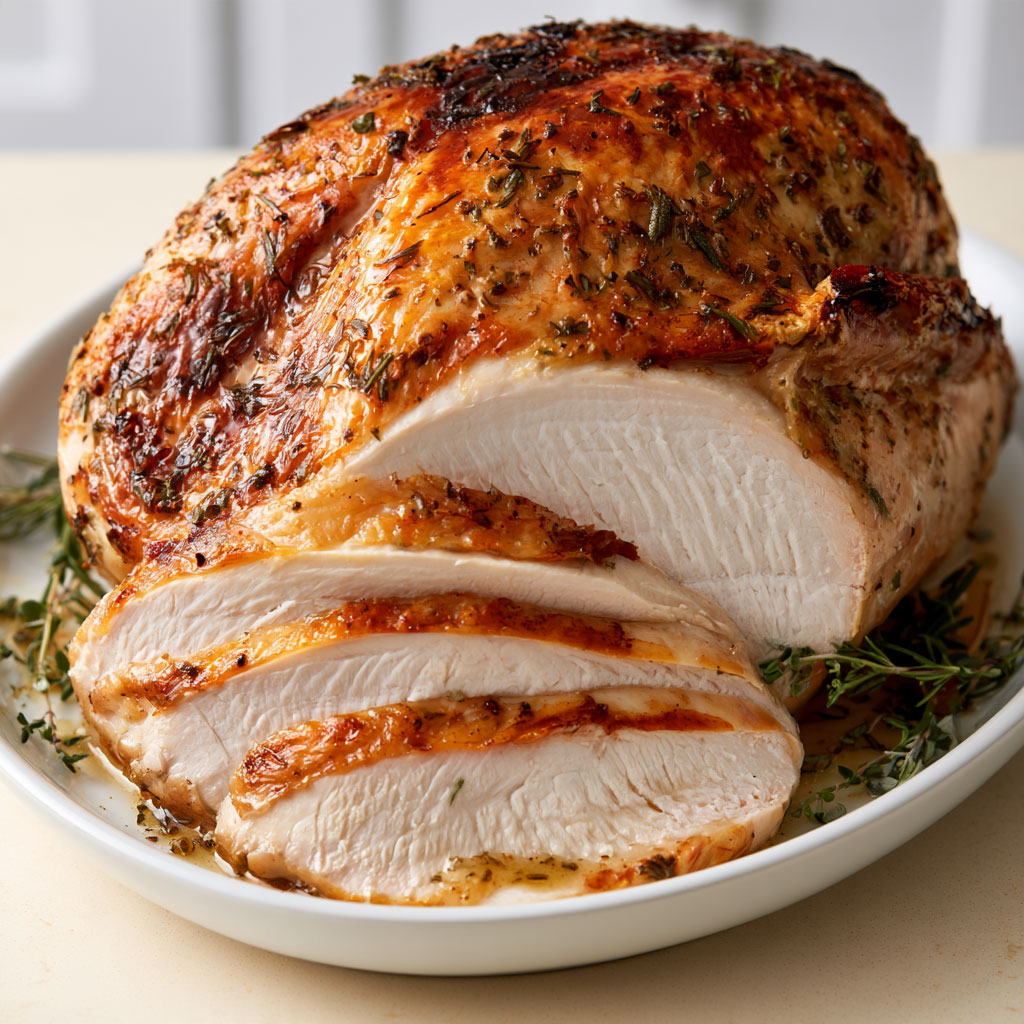
- Once fully cooked, remove the turkey from the oven; it should have deep golden-brown skin with toasted herb flecks and crispy patches.
- Transfer to a cutting board or platter and allow to rest for 10 minutes so the juices redistribute and the meat stays moist.
- Remove kitchen twine or netting if used, then carve across the grain in ⅓ to ½-inch thick slices to ensure tender pieces.
- Arrange the slices attractively on a white ceramic platter, keeping the remaining roast whole for presentation, and garnish minimally with fresh rosemary and thyme sprigs.
- Optionally, spoon some warm pan juices over the carved meat but avoid wetting the skin to preserve crispness.
- Serve immediately with your favorite sides for a perfectly portioned, juicy Thanksgiving centerpiece.
Variations
- Add 1 teaspoon finely grated lemon zest to the herb butter for a bright, citrusy note.
- Increase the garlic to 4 cloves for a more pronounced garlic flavor.
- Omit smoked paprika for a classic herb-only profile without the subtle smoky color.
- Add a pinch of dried marjoram to introduce a gentle sweetness to the aroma.
- Use European-style unsalted butter for a richer, creamier butter flavor.
- For a mild spicy kick, include a tiny pinch of cayenne pepper in the herb butter.
Tips
- Store leftover turkey in shallow airtight containers and refrigerate within 2 hours of cooking; it keeps well for 3 to 4 days.
- Reheat slices gently in a covered baking dish with a few tablespoons of broth at 325°F (165°C) until warmed through to 165°F (74°C) to prevent drying.
- Microwave individual portions with a little broth, covered loosely, checking to ensure the center is hot before serving.
- Freeze cooled cooked turkey in airtight freezer-safe bags with some pan juices for up to 2 to 3 months for best quality; thaw overnight in the refrigerator before reheating.
- Use a reliable instant-read thermometer rather than guesswork to avoid overcooking lean turkey breast meat, which dries out easily.
- Rest the turkey before carving to keep it juicy, and cut across the grain with a sharp knife for tender slices.
- Prepare the herb butter up to two days ahead and refrigerate; this allows flavors to meld and saves time on roasting day.