Skip to content
Instructions:
- Prepare all ingredients, ensuring the egg and butter are at room temperature for better mixing.
- Warm the whole milk gently to 105–110°F (40–43°C); this temperature activates the yeast without killing it.
- Pour the warm milk into a large mixing bowl, then add the instant yeast and sugar, stirring gently until the sugar starts to dissolve.
- Let the yeast mixture rest for about 5 minutes to begin activating while you prepare the other ingredients.
- Incorporate the room-temperature egg into the milk mixture by whisking until fully combined.
- Add the softened butter in small pieces, stirring until it is evenly distributed throughout the mixture.
- In a separate bowl, mix the flour, salt, and finely chopped fresh sage to evenly disperse the herb’s flavor.
- Gradually add the flour mixture to the wet ingredients, stirring with a wooden spoon until a soft, slightly sticky dough forms.
- Turn the dough onto a lightly floured surface and knead by hand for 8–10 minutes until smooth and elastic; if using a stand mixer, knead with a dough hook on medium-low speed for 6–8 minutes.
- Avoid adding extra flour beyond light dusting; the dough should remain slightly tacky to ensure tender, fluffy rolls.
- Shape the dough into a smooth ball and place it in a greased bowl, turning once to coat the surface lightly.
- Cover with plastic wrap or a clean towel and set the dough to rise in a warm, draft-free spot for 60–75 minutes, until it doubles in size.
- While the dough rises, prepare the brown butter sage topping by melting butter over medium-low heat in a light-colored pan, stirring occasionally.
- Allow the butter to foam and the milk solids to brown gently until the butter turns a warm amber color with a nutty aroma; watch closely to prevent burning.
- Remove from heat, add fresh sage leaves, and let them sizzle for 20–30 seconds to crisp and release their fragrance.
- Transfer the brown butter and sage to a heatproof bowl to cool slightly; stir in honey if using for a touch of sweetness.
- Once the dough has risen, gently deflate it and turn out onto a clean surface.
- Divide the dough into 15 equal portions, weighing if desired for uniformity.
- Shape each portion into a smooth ball by stretching edges to the center and rolling gently with a cupped hand.
- Grease a 9 × 13-inch baking dish with softened butter and arrange the rolls in three rows of five, leaving small gaps for expansion.
- Cover loosely with a kitchen towel or lightly greased plastic wrap and let the rolls rise again for 35–45 minutes until puffy and nearly touching.
- Preheat the oven to 375°F (190°C) about 15 minutes before baking.
- Brush the tops of the risen rolls lightly with some of the brown butter, reserving most for after baking.
- Bake the rolls on the center rack for 20–25 minutes, checking at 18 minutes; the tops should be golden brown with caramelized edges.
- If they brown too quickly, tent loosely with foil to prevent burning while the centers finish baking.
- Internal temperature should reach 190–200°F (88–93°C) to ensure fully cooked rolls.
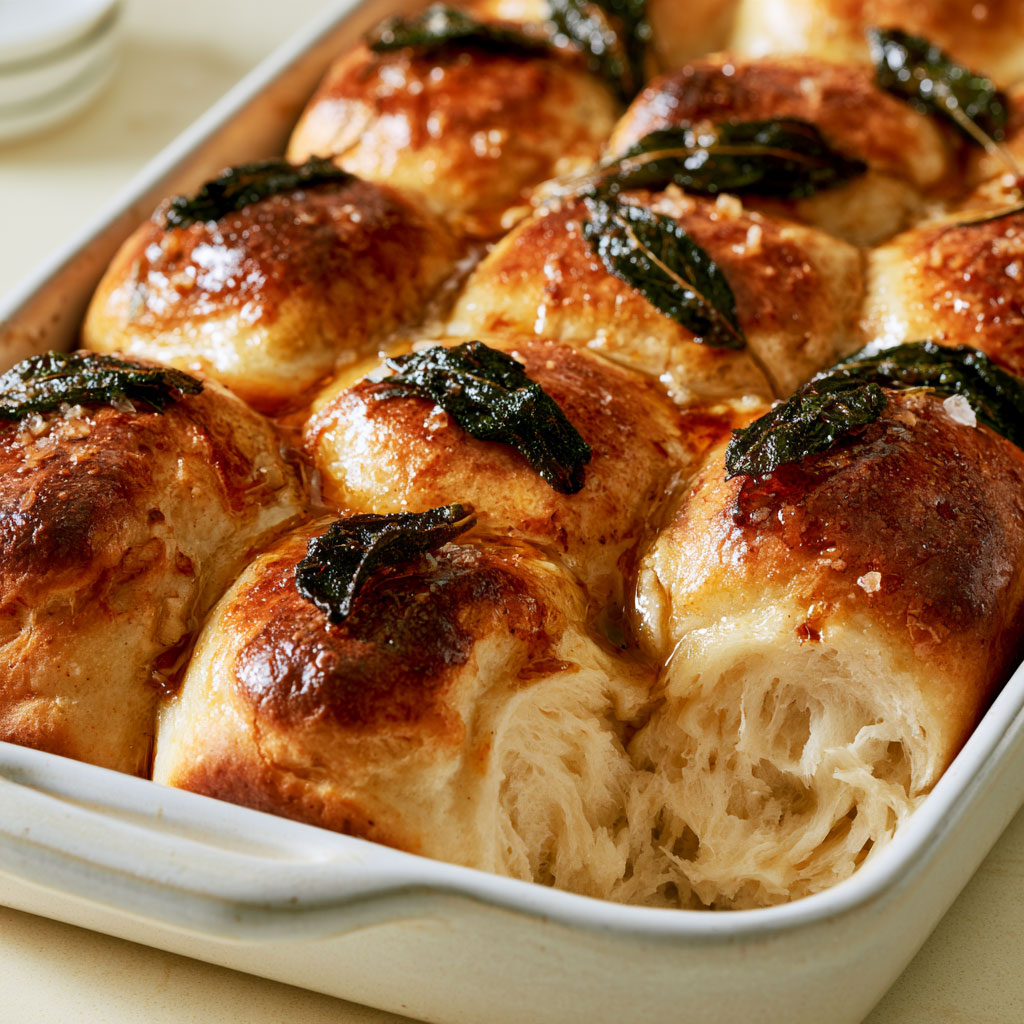
- Remove from the oven and immediately brush generously with the remaining warm brown butter, making sure it seeps between the rolls.
- Scatter the crispy sage leaves on top and sprinkle with flaky sea salt to enhance flavor balance.
- Allow the rolls to rest in the pan for 5–10 minutes so the butter soaks into the crusts.
- Serve warm, pulling apart to reveal soft, fluffy interiors perfect for soaking up sauces or gravy.
Variations
- Substitute fresh thyme or rosemary for sage to create a different but equally aromatic herb flavor.
- Add 2 tablespoons of grated Parmesan cheese into the dough for a savory twist with a subtle cheesy aroma.
- Mix 1 teaspoon of garlic powder into the flour mixture for a mild garlic undertone in the rolls.
- Use half whole wheat flour combined with all-purpose flour for a nuttier flavor and slightly denser texture.
- Drizzle a little maple syrup instead of honey into the brown butter topping for a richer, caramel-like sweetness.
- Top the rolls with coarse sea salt mixed with toasted sesame seeds for an added crunch and nutty flavor.
Tips
- Store leftover rolls in an airtight container at room temperature; they stay fresh for up to 2 days.
- To reheat, warm the rolls in a 300°F (150°C) oven for 8–10 minutes, loosely covered with foil to prevent drying out.
- For longer storage, freeze fully cooled rolls in an airtight freezer bag for up to 2 months; thaw at room temperature before reheating.
- Use a light-colored pan when browning butter to monitor the color change and avoid burning, which can impart bitterness.
- Keep the dough slightly sticky during kneading to ensure the rolls remain tender and fluffy after baking.
- Allow both rises to complete fully; under-risen dough will produce dense rolls rather than light and airy ones.
- Brush the rolls with most of the brown butter immediately after baking to create a glossy, flavorful crust while the interior stays soft.